Leadership is often associated with the ability to say 'yes' to new opportunities, challenges, and responsibilities. However, the ability to say 'no' can be just as important for effective leadership. Saying 'no' can help leaders to prioritize their time, energy, resources, and to avoid overcommitting themselves or the people they lead.
The ability to say 'no' is important for effective time management. Leaders who are constantly saying 'yes' to new requests and demands can quickly become overwhelmed and burnt out. By saying 'no' to non-essential tasks or projects, leaders can focus their time and energy on the tasks and projects that are most important and have the greatest impact.
Saying 'no' can also help leaders to set clear boundaries and expectations with their team. Leaders who are always saying 'yes' to new requests or ideas may give the impression that they are always available or willing to take on more work, which can lead to unrealistic expectations or a lack of respect for the leader's time and resources. By saying 'no' when necessary, leaders can communicate their limits and expectations clearly, and encourage their staff to do the same.
Furthermore, saying 'no' can help leaders to avoid overpromising and underdelivering. Leaders who say 'yes' to every opportunity or request may find themselves spread too thin, and may not be able to deliver on all of their commitments. This can damage their credibility and reputation, and can harm their team's morale and productivity. By saying 'no' when necessary, leaders can avoid overcommitting themselves or their team, and can ensure that they are able to deliver on their promises and commitments.
Of course, saying 'no' is not always easy, especially for leaders who want to be seen as helpful, accommodating, in alignment with district initiatives, and/or team-oriented. However, it is important for leaders to recognize that saying 'no' is not a sign of weakness or selfishness, but rather a sign of good judgment and strategic thinking. Leaders who are able to say 'no' when necessary can demonstrate their ability to prioritize, manage their time effectively, and communicate their expectations clearly.
In the context of the Ontario Leadership Framework, the ability to say 'no' can be seen as connected to "setting directions and priorities." Effective leaders are able to set clear goals and priorities, and to make strategic decisions about how to allocate their time, resources, and energy. Saying 'no' when necessary is important because it allows leaders to make informed and strategic decisions about what to focus on, and what to delegate or decline.
In conclusion, saying 'no' is an important aspect of effective leadership, and should be embraced and cultivated by leaders who want to prioritize their time, energy, and resources, set clear boundaries and expectations, and avoid overpromising and underdelivering. By saying 'no' when necessary, leaders can demonstrate their ability to make strategic decisions and communicate their expectations clearly, and can ensure that they are able to deliver on their promises and commitments.

L2 is the home of Rolland Chidiac's thoughts and relfections as he learns to lead and leads to learn. Using the lens of the Catholic Leadership Framework, Rolland integrates the expectations of a Catholic Leader with his everyday experiences.
Sunday, March 5, 2023

Monday, January 9, 2023
The Role of Vulnerability in Effective Leadership
Leadership is often associated with strength, confidence, and decisiveness. While these qualities are important, they can also create a barrier that prevents leaders from connecting with their team and creating a sense of trust. This is where vulnerability comes in.
Vulnerability is often seen as a weakness, but in reality, it takes a great deal of courage to be vulnerable. It involves being open and honest about your weaknesses, fears, and insecurities. When leaders are able to embrace vulnerability, it can create a sense of authenticity and humanity that is essential for building trust and connection with others.
One of the key benefits of vulnerability in leadership is that it allows leaders to be more approachable and relatable. When leaders show that they are not perfect and are open to feedback and learning from their mistakes, it encourages team members to do the same. This creates a culture of continuous learning and improvement, rather than one of fear and perfectionism.
Vulnerability can also help leaders to be more empathetic and understanding towards their team. When leaders are able to share their own struggles and challenges, it can create a sense of solidarity and encourage team members to open up and share their own experiences. This can foster a sense of connection and support within the team, which can have a positive impact on morale and productivity.
Vulnerability is often seen as a weakness, but in reality, it takes a great deal of courage to be vulnerable. It involves being open and honest about your weaknesses, fears, and insecurities. When leaders are able to embrace vulnerability, it can create a sense of authenticity and humanity that is essential for building trust and connection with others.
One of the key benefits of vulnerability in leadership is that it allows leaders to be more approachable and relatable. When leaders show that they are not perfect and are open to feedback and learning from their mistakes, it encourages team members to do the same. This creates a culture of continuous learning and improvement, rather than one of fear and perfectionism.
Vulnerability can also help leaders to be more empathetic and understanding towards their team. When leaders are able to share their own struggles and challenges, it can create a sense of solidarity and encourage team members to open up and share their own experiences. This can foster a sense of connection and support within the team, which can have a positive impact on morale and productivity.
With respect to the Ontario Leadership Framework, one of the key dispositions outlined in the framework is the ability to "build trusting relationships through honesty, transparency, and vulnerability." This suggests that vulnerability is seen as an important aspect of effective leadership within the context of the Ontario Leadership Framework. By being open and honest about their weaknesses and insecurities, leaders are able to build trust and connection with others, which is essential for creating a positive and collaborative team environment.
Of course, vulnerability is not a one-size-fits-all approach. It is important for leaders to find the right balance and to be mindful of the context in which they are sharing their vulnerabilities. For example, a leader may choose to be more vulnerable in a team meeting or one-on-one coaching session, rather than in a public presentation.
Vulnerability is an important aspect of effective leadership. It allows leaders to be more approachable, relatable, and empathetic, which can foster a sense of trust and connection with their team. By embracing vulnerability, leaders can create a culture of continuous learning and improvement, and build strong and supportive relationships with their team.
Of course, vulnerability is not a one-size-fits-all approach. It is important for leaders to find the right balance and to be mindful of the context in which they are sharing their vulnerabilities. For example, a leader may choose to be more vulnerable in a team meeting or one-on-one coaching session, rather than in a public presentation.
Vulnerability is an important aspect of effective leadership. It allows leaders to be more approachable, relatable, and empathetic, which can foster a sense of trust and connection with their team. By embracing vulnerability, leaders can create a culture of continuous learning and improvement, and build strong and supportive relationships with their team.
Friday, January 6, 2023
Leadership Pro Tip: Take Time to Self-Rreflect
As a leader, you are constantly faced with challenges and opportunities that require you to make tough decisions. It’s easy to get caught up in the day-to-day hustle and focus solely on achieving your goals, but taking the time to reflect on your actions and behaviors is crucial for your personal and professional growth.
Self-reflection allows you to step back and assess how you’re doing, both as an individual and as a leader. It helps you identify areas where you’re excelling and areas where you may need to improve. By actively engaging in self-reflection, you can become more self-aware, which can lead to better decision-making, improved communication, and stronger relationships with your team.
One way to practice self-reflection is to set aside dedicated time for it on a regular basis. This could be a daily or weekly ritual, or even just a few moments at the end of each day to reflect on your actions and thoughts. You can also try journaling, podcasting, or sketch-noting, which can act as helpful tools for organizing your thoughts and tracking your progress over time.
It’s important to be honest with yourself during self-reflection. This means acknowledging your strengths, as well as your weaknesses. By acknowledging your weaknesses, you can work to improve upon them and become a more well-rounded leader.
Another aspect of self-reflection is considering how your actions and behaviors impact those around you. As a leader, your actions and decisions have a ripple effect on the team you work with and the overall culture of your organization. By reflecting on the impact of your actions, you can make sure you’re leading in a way that aligns with your values and the values of the team.
In addition to personal growth, self-reflection can also improve your leadership skills and increase your effectiveness as a leader. By regularly reflecting on your actions and behaviors, you can gain insights into what’s working and what’s not, and make adjustments as needed. This can help you become a more agile leader who is able to adapt to changing circumstances and lead a team through challenges.
Self-reflection can also help you stay grounded and centered as a leader. It’s easy to get caught up in the demands and pressures of leadership, but taking the time to reflect on your values and priorities can help you stay focused and true to yourself.
Self-reflection is an essential practice for any leader. It allows you to become more self-aware, improve your leadership skills, and stay centered and true to your values. By setting aside dedicated time for self-reflection and being honest with yourself, you can continue to grow and evolve as a leader. So, it is always good to make self-reflection a regular part of your leadership routine.
Self-reflection allows you to step back and assess how you’re doing, both as an individual and as a leader. It helps you identify areas where you’re excelling and areas where you may need to improve. By actively engaging in self-reflection, you can become more self-aware, which can lead to better decision-making, improved communication, and stronger relationships with your team.
One way to practice self-reflection is to set aside dedicated time for it on a regular basis. This could be a daily or weekly ritual, or even just a few moments at the end of each day to reflect on your actions and thoughts. You can also try journaling, podcasting, or sketch-noting, which can act as helpful tools for organizing your thoughts and tracking your progress over time.
It’s important to be honest with yourself during self-reflection. This means acknowledging your strengths, as well as your weaknesses. By acknowledging your weaknesses, you can work to improve upon them and become a more well-rounded leader.
Another aspect of self-reflection is considering how your actions and behaviors impact those around you. As a leader, your actions and decisions have a ripple effect on the team you work with and the overall culture of your organization. By reflecting on the impact of your actions, you can make sure you’re leading in a way that aligns with your values and the values of the team.
In addition to personal growth, self-reflection can also improve your leadership skills and increase your effectiveness as a leader. By regularly reflecting on your actions and behaviors, you can gain insights into what’s working and what’s not, and make adjustments as needed. This can help you become a more agile leader who is able to adapt to changing circumstances and lead a team through challenges.
Self-reflection can also help you stay grounded and centered as a leader. It’s easy to get caught up in the demands and pressures of leadership, but taking the time to reflect on your values and priorities can help you stay focused and true to yourself.
With respect to The Ontario Leadership Framework, self-reflection is one of the competencies within the framework, and it is described as the ability to "reflect on and evaluate one's own thoughts, feelings, and actions, and to learn from experience."
By engaging in self-reflection, leaders can develop their understanding of their own leadership style, strengths, and areas for improvement. This in turn can help them to become more effective leaders, as they are able to make informed decisions, communicate effectively, and build strong relationships with their team.
Self-reflection is also connected to other competencies within the Ontario Leadership Framework, such as emotional intelligence, which involves being aware of and managing one's own emotions and the emotions of others, and continuous learning, which involves seeking out opportunities to learn and grow. All of these competencies work together to support effective leadership and help leaders to adapt to changing circumstances and lead their teams through challenges.
Overall, self-reflection is an important component of the Ontario Leadership Framework, as it helps leaders to understand themselves, build self-awareness, and continually improve their leadership skills.
By engaging in self-reflection, leaders can develop their understanding of their own leadership style, strengths, and areas for improvement. This in turn can help them to become more effective leaders, as they are able to make informed decisions, communicate effectively, and build strong relationships with their team.
Self-reflection is also connected to other competencies within the Ontario Leadership Framework, such as emotional intelligence, which involves being aware of and managing one's own emotions and the emotions of others, and continuous learning, which involves seeking out opportunities to learn and grow. All of these competencies work together to support effective leadership and help leaders to adapt to changing circumstances and lead their teams through challenges.
Overall, self-reflection is an important component of the Ontario Leadership Framework, as it helps leaders to understand themselves, build self-awareness, and continually improve their leadership skills.
Self-reflection is an essential practice for any leader. It allows you to become more self-aware, improve your leadership skills, and stay centered and true to your values. By setting aside dedicated time for self-reflection and being honest with yourself, you can continue to grow and evolve as a leader. So, it is always good to make self-reflection a regular part of your leadership routine.
Saturday, December 3, 2022
What are you going to do? A Leadership Recipe for Success
It doesn't matter where you work, what your title is, or what you do, you can lead. You can be one of the people that others look to for guidance, modelling, and/or answers. Whether others look to you or not, you'll have to make decisions, whether it's on your own or collaboratively. Improve yourself and your leadership by improving your leadership skills, understanding your locus of control, knowing what your core values are, and being authentic to yourself and others.
______________________________________________________________________________


I totally disagree with faking it until you make it. How about you acknowledge where you are and make a plan that will help you learn and/or understand something better. Here is a great article on alternatives to faking it until making it.
Want to improve upon your leadership skills, check out the graphic below.

There are tons of resources on the internet that you can find and use to develop your leadership skills and mindset. Don't want to do this alone? Reach out to 2-3 leaders you respect/admire and ask them to mentor you. How do they lead? What do they do when decisions need to be made? A couple of questions for you to reflect on as you observe and learn.
Read, listen, watch, talk...do what you need to do to grow and develop.
______________________________________________________________________________
When they look at you, what are you going to do? When something goes wrong, what are you going to do? When you see an injustice, what are you going to do?
Know what is in your control and start from there.

You certainly don't want "...a lifetime of frustration and misery." so take advantage of what is in your control - how you treat others, how you treat yourself, and how you think and feel. Set yourself up so that you can push away the things you can't control (how others treat each other, how others treat you, how others feel) as you respond to a situation.
______________________________________________________________________________
Know what you value, communicate that to others in your actions and your words. Make them a priority and know that when you honor them and live by them, it will reduce chaos in your mind and help you sleep better at night.

Not sure what you value or struggle to name them? Check out this great list by Brene Brown. As you learn and unlearn on your journey, your values could change. So it's important that you revist and reflect on them often.
______________________________________________________________________________
Last but not least, if you if you don't know what to do, don't pretend like you know. Don't ignore the situation. Do something. Even it means declaring that you are unsure, you are doing something.

I totally disagree with faking it until you make it. How about you acknowledge where you are and make a plan that will help you learn and/or understand something better. Here is a great article on alternatives to faking it until making it.
____________________________________________________________________________
Take time to reflect on where you are at on your leadership journey and what you can do to boost yourself. It doesn't matter what your role is, improving your leadership skills, understanding your locus of control, knowing what your core values are, and being authentic to yourself and others is going to benefit you no matter where you are or what you do. What are you going to do? You are going to get better!
If you are an Ontario educator and interested in a formal leadership position, make sure to check out the Ontario Leadership Framework or the Ontario Catholic Leadership Framework. Become familiar with the framework, reflect on the work you do and whether it aligns with the framework, do the work and connect it to the framework!!
Reach out if you have questions/comments.
Saturday, November 26, 2022
Leadership Actions
Anyone can talk about being a leader. Talk is good - it's a step in the right direction - but action is needed.
From my perspective, there are all kinds of things I can do to grow as a leader.
First and foremost, I believe it is important that I do things that I am interested in. Learning how to lead is best accomplished when it is connected to something I am passionate about and willing to invest my time and energy in.
My interests in leveraging technology, the use of social media, and diversity, equity, and inclusion have provided me with ample opportunities to learn and lead. Using my interests as a foundation, I have been developing my leadership skills by practicing discipline, taking on more at advanced levels, inspiring others, being open to learning and unlearning, and networking to build a variety of relationships and connections.
The leadership work directly connected with my interests have allowed me to apply what I am learning to areas that I don't necessarily have interests in but are necessary in my line of work. As a formal leader, there are lots of areas that require leadership so picking and choosing where and when to lead isn't an option. When decisions need to be made, and action needs to be taken, there is no room to waiver.
The more familiar I can be with the basics, the more automatic it will be for me to apply my knowledge and skills when I am faced with any opportunity to make decisions and take the lead in situations/activities.
What matters most is that I am engaging in constant learning and reflection on the skills and practices that are needed to lead. There will always be time to talk about what it means to be a leader and what might need to be done to lead BUT without action, none of that stuff will matter.
Interests --> learn ---> lead by talk and action ---> assess ---> shift, if needed ---> repeat!
Monday, June 27, 2022
My Learning and Leadership this School Year
It has been a great school year for me. In my role as a re-engagement teacher I got to visit and work at many different schools, meet lots of new people, and teach a lot of awesome kids.
I collaborated my guts out - in a very different way that how I did it when I was a classroom teacher.
I communicated with many people, in a variety of ways.
I had to think critically about many different and difficult situations which lead to innovative and creative solutions (some worked and some didn't).
I was constantly learning. Learning about policies and procedures, culture (big c and small c), how the "system" works (or at least how it is perceived to work), mental health, and about myself.
I grew in my Faith as I talked the talk and walked the walk. I made a point of being aware of my spirituality and made it a priority. Keeping my faith front and center helped ME and made me a better teacher for my students, consultant for the teachers I worked with, and a guide for parents.
I led. Using the Catholic School Level Leadership Framework as my guide, I took every opportunity to lead and learn more about leadership.
In terms of setting directions, I was part of a small team (we called ourselves the Unicorn Sqaud) that created the framework for our Board's re-engagement initiative. We identified short and long term goals, created high expectations for ourselves, and communicated our vision and goals to those we worked with and served. Using Ministry expectations, we established processes that would maximize resources and help students out in the best possible ways.
With respect to building relationships and developing people, I provided support and demonstrated consideration for the staff members I worked with, modeled the values and practices that consider what is best for student learning and well being, and built trusting relationships with and among students, staff, and parents.
In terms of developing the organization to support desired practices, I helped build a collaborative culture with the staff I worked with, worked with people in a way that demonstrated the value I place on their thoughts and opinions to help build collaborative practice, established productive relationships with families and other stakeholder in the educational community, and maintained my presence and involvement as a safe and healthy one.
With respect to improving the instructional program, I provided teachers and parents with instructional support, monitored progress of student learning and improvement, and communicated effective relevant information about effective programming to students, teachers, and parents.
In terms of securing accountability, I continued to build a sense of internal accountability in myself with respect to how I managed my professional time and ensured that when I was not satisfied with my work I would consult with my co-workers, supervisor, and mentors in order to find satisfaction and pride. When it comes to meeting the demands for external accountability, I provided the appropriate reports to my Principal and Supervisory Officer when requested to do so. Also, I shared my plans and process with people connected to the students I was working with - the students themselves, classroom teachers, special education teachers, guidance counsellors, vice principals, principals, and parents.
It was an amazing year of learning and leading. I worked with students in grades 7-12 this year and look forward to continuing to work as a re-engagement teacher next year working with students in grade 7-9.
A successful school year, in no small part due to the support of my wife and children, my mentors Principal Carla Santomero and Principal Paul Gladding, and Father Cruz, pastor at St. John's Catholic Church.
Sunday, April 3, 2022
Becoming a Better Person for Others: Faith into Action
I've been thinking a lot about Social Justice and my work as a re-engagement teacher lately. In my travels this year, I feel like I a have been putting my faith into action more than ever before. My day to day interactions tend to involve working with people who are struggling, in more ways than one. For a variety of reasons (e.g. poverty, racism, identity, learning differences, family dynamics, social issues, mental health, etc) the experience of "school" is one that they are not fully invested in or have walked away from. As I work with each student and learn more about them, I am humbled to be part of their narrative, to do what I can to build them up and assist them in finding a pathway that works for who they are and/or who they want to become.
I recently read an article that resonates with my current job and my reflections on how I am serving others. Written by Joe Paprocki, it is entitled Social Justice - Catholic Social Teaching. The article is short and sweet but power packed for me. Paprocki recalls hearing over and over again in school that he was to become a man for others - one who would translate his faith into action and tend to the needs of others, particularly those who are less fortunate. He refers to a document entitled "Sharing Catholic Social Teaching: Challenges and Direction" that was written by the bishops of the United States as a guide to help put faith into action. The document outlines seven principles of social justice in Catholic teaching that can be followed in order to discover how to live as people for others. For the purposes of this blog post, I would like to focus on the following four principles:
1. Dignity of the Human Person
2. Call to Family, Community, and Participation
3. Rights and Responsibilities
4. Option for the Poor and Vulnerable
As I consider the four principles listed above, I wonder how have I been translating my faith into action, how my thoughts and actions connect to the Catholic leadership framework, and what I need to work on to become a better man for others. I will explore the answers to my wonderings below.
Dignity of the Human Person
Faith into action: How do I treat people? How do I show them respect? We are all God's children - no matter our position. I think that I generally treat people well. I give them the benefit of the doubt and I enter into situations with an open mind. I try and come from a place of wonder and compassion and I listen so I can understand and offer suggestions for support.
Catholic leadership framework: Building Relationships and Developing People ~ Leaders listen to ideas, are open to them, and genuinely considering their value. Leaders demonstrate respect, care, and personal regard for one another. Treating people with dignity helps build trusting relationships.
Next steps: I need to continue to consider how I will deal with people who don't reciprocate an openness to me. I am learning not to take things personally and to remember that I am in a privileged position within a system and society that may not "see" the people that I am trying to help.
Call to Family, Community, and Participation
Faith into action: We are called to support the family so people can participate in society, build community, and promote well being. I spend most of my time with students but I actively communicate with their parents to provide academic updates, ask questions, and provide suggestions/support. If my support is not enough, I connect the family to the social worker that is part of the re-engagement team and together, we work to move in a positive direction.
Catholic leadership framework: Building Relationships and Developing People ~ Leaders are easily accessible to students and parents and have frequent, meaningful interactions with students and parents in order to further the academic goals. Developing the Organization to Support Desired Practices ~ Leaders create an environment in which parents are welcomed, respected and valued as partners in their children’s learning, demonstrate the type of leadership that parents can trust - confident, systematic and attentive, work directly with families of diverse backgrounds to help them provide their children with support in the home that will contribute to their success at school, and help connect families to the wider network of social services as needed.
Next steps: I need to continue to hone my understanding of my role so that I can tend to the needs of the families I serve but not overstep in areas that require more specialized assistance. I want to make sure that I refer my student's and families to the people that are trained to provide them with what they need to be active participants in their communities.
Rights and Responsibilities
Faith into action: we are called to protect the rights that people have to things that are required to have a decent life (food, clothing, shelter). I consider education to be one of those rights. I learn about each of my students and the situation that they are in. As I collaborate with schools to assist my students I inform them of what options are available to them and the responsibilities that come with each option. The students don't always know what their rights are so I ensure that they are informed so they can assist in making decisions about their education.
Catholic leadership framework: Securing accountability ~ Leaders promote collective responsibility and accountability for student achievement and well-being. Improving the instructional program ~ Leaders give priority to identifying those students most in need of additional support. Developing the organization to support desired practices ~ Leaders help connect families to the wider network of social services as needed.
Next steps: It is important for me to continue to work with school staff to learn about the intricacies of each student case that I am responsible for. The more I know the better I can inform. Being honest with my students will also build trusting relationships. It is important for students to be active participants in their education.
Option for the Poor and Vulnerable
Faith into action: we are called to pay attention to the needs of the poor. Some of the students/families I work with belong to low income households. The lack of finances adds another layer of stress and causes priorities to shift. In these situations, I take great care to be compassionate and as helpful as I can be while respecting the wishes of the students/families. The schools are always helpful in these situations and will provide for the families if they are ok with it. I can't "fix" this for people but I can certainly be supportive and connect the students/families with people who can help more than I can.
Catholic leadership framework: Developing the Organization to Support Desired Practices ~ Leaders create an environment in which parents are welcomed, respected and valued as partners in their children’s learning, demonstrate the type of leadership that parents can trust - confident, systematic and attentive, work directly with families of diverse backgrounds to help them provide their children with support in the home that will contribute to their success at school, and help connect families to the wider network of social services as needed. Building relationships and developing people ~ Leaders create and sustain a caring Catholic school culture, model responsibility, integrity and thoroughness in carrying out tasks, act in ways that consistently reflect the school’s core values and priorities in order to
establish trust, demonstrate respect for students and parents by listening to their ideas, being
open to those ideas, and genuinely considering their value, and demonstrate respect, care and personal regard for students and parents.
Next steps: As I stated above, this is not something I can "fix" but building trusting relationships with people by being respectful and authentic is a constant goal that I work toward. Connecting students/families from low income households with the right community supports is a start. I can do my part by assisting with academics in a way that works for the student based on their particular life situation and needs. I can be a liaison between the family and the school and I can connect the student and family with the social worker on my team. These situations are not easy to navigate but tend to get better when they know my role and see that my actions and words are aligned.
As a Catholic teacher/leader, it is important for me to continue to grow and serve the students, families, and staff that I work with. Actioning my faith provides alignment between what I believe and how I act. Checking in on the Catholic Leadership Framework guides me with respect to how I lead and what I need to work on in order to grow as a Catholic leader.
Taking the time to reflect is key. It is what provides me with the data I need to stay on my current course or change direction. Minor adjustments are inevitable. They are made as I continue to learn how to be a better person and how to lead.
Sunday, February 13, 2022
Leadership Portfolio: Reflect, Connect, Learn
When I started my teaching career way back in 2000, my professional portfolio was a big binder full of artifacts of my learning. It was a bunch of "stuff" that I used to show others what my learning journey looked like. That binder also included "leadership" artifacts. I combined the two at that time.
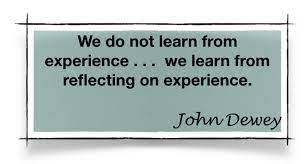


A bunch of artifacts, but no reflections attached to them...until I participated in Part 2 of the Leadership development course in my school board. During this course, emphasis was placed on creating/revisiting/re-imagining a portfolio connected to our leadership journey. We were provided with ideas and emphasis was placed on engaging with an idea in a way that worked for each individual. That is when I decided to ditch the binder of artifacts and create what I have here today:
A blog where I reflect on leadership opportunities/experiences as they connect to the Catholic Leadership Framework and the goals of my school board.
My participation in leading school/board/provincial initiatives is great and I can list all kinds of things I have done and been part of BUT thinking about what I learned from those experiences and how they help my leadership journey are the gold nuggets for me.
Let me provide an example of how I reflect on what I have done and how I learn more about my leadership style, capacity, and continued growth.
Artifact of Leadership
After I completed the Part 2 leadership course, I was invited back to speak to Part 2 participants about my Leadership Portfolio - my blog and why I decided to use this format to track my leadership journey. The presentation I provided to the participants is a leadership artifact for me. I was invited to speak to a group of people about something I was doing - a great example of me stepping up to try something new, scaffold the process for others, to lead them to try something new, and a way to gain confidence in my leadership ability/skills.
Connection to my Board's Goals and the Catholic Leadership Framework
For me, it was pretty awesome to be invited to speak to participants of the Leadership course about my portfolio. Someone thought it would be great for me to do this and I did it!! I could now list this experience as an artifact of me "leading". Well, so what?
"Leadership is the exercise of influence on organizational members and diverse stakeholders toward the identification and achievement of the organization’s vision and goals." - this is listed at the top of the Catholic Leadership Framework document.
This is the part of my process where I reflect on what I did and how I was able to positively influence my colleagues towards my board's goals with respect to leadership development. Speaking to the course participants about my portfolio choice, my process, and the benefits to my leadership and learning provided them with "real life" application and one more option for them to consider as they journey toward leadership. My presentation to the participants of the course aligned with the goals of the district with respect to their leadership development strategy and provided me with an opportunity lead.
I will get to my learning after I make a connection to the Catholic Leadership Framework.
With respect to the Leadership Framework, I could make a number of connections but for the purposes of this blog post, I am going to focus on the 'Building Relationships and Developing People' pillar.
When I look at the leadership indicators under the 'building relationships' pillar, my presentation connects with the following:
- encourage staff to reflect on what they are trying to achieve and how they are doing it
- lead discussion about the merits of current and alternative practices
- facilitate an opportunity for staff to learn from each other
- suggest new ideas for learning
- encourage staff to develop and review their own goals for professional growth and the relationship of those goals to board goals and priorities
- encourage staff to try new practices that are consistent with both their interests and board goals
- demonstrate the importance of continuous learning through visible engagement in my own professional learning
- exemplify, through my actions, the board’s core values and its desired practices
For me, making connections to the Framework provides an awareness of how my experiences align with the what is expected from Catholic leaders in Ontario. As I make connections to the Framework I also become more familiar with the indicators so I can consider incorporating them in the work that I do.
The Learning
I've identified a leadership activity that I lead/engaged in and reflected on how it connects to Board goals and the Catholic Leadership Framework. So, what have I learned from reflecting on my experience??
- I can present my work to others and the more I do, the greater my confidence to speak to groups will grow. This is important for me because I believe it is an important skill as I work on positively influencing the people I work with to do great work.
- Leaders in my school board value my work and believe others can benefit from it. The relationships I establish with people in my district are important for my learning and hopefully for their learning as well.
- I am in alignment with my Board's goals and the indicators listed in the Catholic Leadership Framework. It is important for me to innovate and take risks by trying new things but it is also important that I am working towards a collective goal to improve staff and student achievement.
- I have things to work on. I need to continue to engage in leadership activities, reflect on what I did well and what I need to improve on. I speak about my lived experience but how can I improve on my communication skills to better deliver my message??
This is it, folks. This blog is how I process my leadership experiences. It's all about reflecting, connecting, and learning. The artifacts are just a small part for me. I mean, it is important to refer to the ACTIVITIES I engage in to demonstrate that I am putting in the work BUT the real work for me involves the REFLECTION on the ACTIVITIES and the LEARNING that comes from them.
Do you have a leadership portfolio? How are you learning more about you as a leader? I'd love to hear from you about your process!
Wednesday, June 16, 2021
Finding the Fuel to Excel
Since March 2020, I have been in a hyper state of reflective practice. The global pandemic flipped my work life upside down - causing me, and really the entire education world in Ontario, to re-evaluate how teaching and learning works when we are not face to face with our students.
In addition to the pandemic, there have been a number of other events (George Floyd, BLM, US election, the Ford government, the 215 children in BC, etc) that have caused me to be more disciplined in looking after my mental health by entering into a reflective state with respect to my life, how I see myself, and what I need to do to become a better version of myself - in all aspects of my life (partner, parent, educator, friend/ally).
Between the curveballs thrown at me as a classroom teacher and the things happening around me with respect to race and equity, I have had to examine my personal leadership resources and take stock of what I have in abundance, what I am depleted of, and where I can get more of what I need. The Catholic Leadership Framework identifies cognitive, social, and psychological resources that effectively enact leadership practices. I have spent a significant amount of time thinking about how I am doing in terms of my problem solving ability, my professional practices and how they lead students to success, dealing with my emotions, being proactive, resilient, and optimistic. As the school year comes to an end, I can say that the reflective practice I have been engaged in has allowed me to "check in" with myself often and evaluate what I am doing well and where I need to pay more attention.
My constant "check ins" lead me to want to engage in activities that would positively feed me. Mentorship sessions with leaders inside and outside of the WCDSB, the Catholic Leadership Through an Equity Lens initiative, and coaching the Girls Who Game program at my school are the main things that brought me a sense of value and joy. Those three things provided me with the fuel I needed to keep making a positive difference in myself and the staff and students I work with no matter what was happening around me.

Through the lens of The Catholic Leadership Framework, my practice of reflecting on what is working and what isn't working helps me set direction, build relationships, support desired practices, improve the instructional program, and secure accountability. When I think about the purposeful conversations I have had with formal leaders this school year, I immediately recall learning about the importance of setting high expectations and meeting the demands of the different stakeholders I work with/for. The Catholic Leadership Through an Equity Lens initiative provided me with the opportunity to share my leadership discernment story, the importance of building trusting relationships, and staffing the instructional program in a purposeful way to serve the diverse needs of our students and community. Leading the Girls Who Game program allowed me to work on being accountable to my administrators, the outside groups supporting the program, and most importantly, the students themselves. The program also stimulated growth in staff members who were part of the collaborative process, allowed me to monitor progress in student learning, and allowed me to help build a sense of internal accountability in myself and the other adults working with me.
As I approach the end of this very interesting and unprecedented school year, I am walking away from it feeling successful. The stress and adversity lead me to dig deeper into who I am, the blessings I have in my life, and where the fuel is to keep me going in the right direction.
Friday, August 28, 2020
Talk Me Through Your Process
I recently engaged in a conversation about the thoughts/feelings/actions connected to becoming a school principal. Ramona Meharg, Chris Cluff, and I were talking about our experiences with the Principal's Qualification Program (PQP) and the 'roads' we traveled that led us there.
As we were talking about the thoughts, feelings, and actions that we engaged in to earn the credentials to qualify us for the PQP, Chris asked if we wanted to go deeper by starting a podcast where we could talk about our process - past, present, and future. All three of us were game and the "Talk Me Through Your Process" Podcast was born.

It's a bit of a mouthful but if you can get past that you will quickly realize that the three of us are serious about personal and professional growth, self awareness and reflection, and continuing to learn about our process to formal leadership in education.

Graphic created by Chris Cluff
The podcast is a great tool to assist us in sharing our perspectives, learning from each other, and learning from others outside of our immediate circle. We are modeling our process in a public way with the hope that it will start up great discussions and encourage others to do the same. As my friend Joe Marquez likes to say, education is a collaborative sport!
One of the things that has become part of my leadership process involves making connections between the work I do and and the Catholic Leadership Framework. I would recommend this practice to anyone interested in becoming a school Principal because it can lead to a familiarity with effective individual and system practices. Becoming familiar with the expectations and then connecting them to one's practice, and vice versa, will help build the flexibility and fluency required to lead a school. This is part of my process and I suspect that it will help me as I move closer to becoming a school Principal.
I invite you to check out the conversations we are having AND welcome you to join us! You can find the Talk Me Through Your Process Podcast on YouTube, Podbean, and Apple Podcasts. Reach out with your questions, comments, and process so we can collaborate to become the leaders that schools deserve. Feel free to comment below or connect on twitter (@rchids, @chrisjcluff, @RamonaMeharg).
Monday, April 13, 2020
Leadership During a Pandemic
The Covid-19 Pandemic has really flipped our way of living upside down.
It started on the other side of the world and has ended up in our backyard, literally. The way we live and operate day to day has changed and continues to change at a fast pace. The last time I was with people, other than my family, was March 13. It was announced on March 12 that schools would be closed for an additional two weeks after the March break ended. With those measures, we were to return to school on March 30. Today is April 13 and we have been told that we may return to school on May 4th.
In addition to getting used to teaching my class in a completely different way, I have been paying close attention to the leaders around me and how I can lead in small 'l' ways as we embark on a journey that has never been done before.
I have been thinking about and reflecting on the actions of my Principals. They have both been great at keeping us informed and connected. We have had several online staff meetings and some social ones as well. They have been bringing us together to keep us up to date about what is happening in our Board and they have provided us with optional social meetings where we can gather to talk and hang out. They have not faltered and they have not shied away from their leadership responsibilities.
In fact, as I consider the Catholic Leadership Framework and how my principals have been operating, I can say that their words and actions align with all five of the pillars of the leadership framework. Here are some examples:
1. Setting Directions: they have been building a vision of what our work will look like, establishing short term goals, and communicating with us.
2. Building Relationships and Developing People: they have been providing us with a time and place (digital) to get together and share our thoughts/feelings, have been empowering staff to share best practices and to learn more about tools and strategies that may meet their needs.
3. Developing the organization to support desired practices: they have been building collaborative cultures and distributing leadership, assisting us in continuing to improve our relationships with families and the community, and providing us with information on resources that may be valuable to us at this time.
4. Improving the Instructional Program: they have been staffing the school - we have had teachers return from maternity leave and they hired a new teacher for one that just retired, providing instructional support, and buffering staff from possible distractions from their work.
5. Securing Accountability: they have been building the staff members sense of internal accountability and meeting the demands for external accountability.
They have been, and continue to be, great examples for me as they do their work. As they lead, I can see that they meet the expectations of the framework as well as meet staff members where they are at and offer them a helping hand to continue to develop as educators and leaders (formal and informal).
As I observe them, I consider how I am leading at this time. I certainly follow their lead, but outside of their direct influence, what I am doing to lead? How do my words and actions fit within the leadership framework? As an aspiring formal leader, these questions are important for me to consider and to act upon. When I reflect on my thoughts and actions during this pandemic, I can make connections to the leadership framework as well as consider next steps to work on meeting expectations within the framework. Here are some examples of how I have been leading within the framework:
1. Setting Directions: I have been working hard with my colleagues and myself in order to set short term goals that facilitate a positive learning environment for my students while setting professional goals for myself and assisting my colleagues in doing the same for themselves.
2. Building Relationships and Developing People: I have been connecting with and helping out staff members at my school and other schools who have reached out for support and guidance. This has brought me great joy and has presented me with a collaborative model to problem solve. The best of both worlds as we work to meet our student's needs during this unprecedented time.
3. Developing the organization to support desired practices: I have initiated and joined in on collaborative ventures where leadership is distributed based on participant interest and skill set, I am aware of and working towards continuing to build positive relationships with my families and the greater community using digital means.
4. Improving the Instructional Program: I have been researching and implementing digital practices in order to help lead my students and colleagues to success, and I am paying close attention to the progress my students have been making in order to provide them with feedback that will take them from where they are and move them forward.
5. Securing Accountability: I have been reaching out to the parents of my students and providing them with my role in our new learning environment, I communicate my expectations to my students and keep them informed on the expectations I have for myself with respect to my availability to them, and what I will be doing to support their learning and well being.
As we continue to live and learn each day during this pandemic, I will be keeping my eyes and ears open on the leaders around me. My perspective on this time is that this is a wonderful opportunity to learn and grow as a leader - acquire new perspectives and skill sets - that will benefit my growth and that of the people around me, today and in the future.
It started on the other side of the world and has ended up in our backyard, literally. The way we live and operate day to day has changed and continues to change at a fast pace. The last time I was with people, other than my family, was March 13. It was announced on March 12 that schools would be closed for an additional two weeks after the March break ended. With those measures, we were to return to school on March 30. Today is April 13 and we have been told that we may return to school on May 4th.
In addition to getting used to teaching my class in a completely different way, I have been paying close attention to the leaders around me and how I can lead in small 'l' ways as we embark on a journey that has never been done before.
I have been thinking about and reflecting on the actions of my Principals. They have both been great at keeping us informed and connected. We have had several online staff meetings and some social ones as well. They have been bringing us together to keep us up to date about what is happening in our Board and they have provided us with optional social meetings where we can gather to talk and hang out. They have not faltered and they have not shied away from their leadership responsibilities.
In fact, as I consider the Catholic Leadership Framework and how my principals have been operating, I can say that their words and actions align with all five of the pillars of the leadership framework. Here are some examples:
1. Setting Directions: they have been building a vision of what our work will look like, establishing short term goals, and communicating with us.
2. Building Relationships and Developing People: they have been providing us with a time and place (digital) to get together and share our thoughts/feelings, have been empowering staff to share best practices and to learn more about tools and strategies that may meet their needs.
3. Developing the organization to support desired practices: they have been building collaborative cultures and distributing leadership, assisting us in continuing to improve our relationships with families and the community, and providing us with information on resources that may be valuable to us at this time.
4. Improving the Instructional Program: they have been staffing the school - we have had teachers return from maternity leave and they hired a new teacher for one that just retired, providing instructional support, and buffering staff from possible distractions from their work.
5. Securing Accountability: they have been building the staff members sense of internal accountability and meeting the demands for external accountability.
They have been, and continue to be, great examples for me as they do their work. As they lead, I can see that they meet the expectations of the framework as well as meet staff members where they are at and offer them a helping hand to continue to develop as educators and leaders (formal and informal).
As I observe them, I consider how I am leading at this time. I certainly follow their lead, but outside of their direct influence, what I am doing to lead? How do my words and actions fit within the leadership framework? As an aspiring formal leader, these questions are important for me to consider and to act upon. When I reflect on my thoughts and actions during this pandemic, I can make connections to the leadership framework as well as consider next steps to work on meeting expectations within the framework. Here are some examples of how I have been leading within the framework:
1. Setting Directions: I have been working hard with my colleagues and myself in order to set short term goals that facilitate a positive learning environment for my students while setting professional goals for myself and assisting my colleagues in doing the same for themselves.
2. Building Relationships and Developing People: I have been connecting with and helping out staff members at my school and other schools who have reached out for support and guidance. This has brought me great joy and has presented me with a collaborative model to problem solve. The best of both worlds as we work to meet our student's needs during this unprecedented time.
3. Developing the organization to support desired practices: I have initiated and joined in on collaborative ventures where leadership is distributed based on participant interest and skill set, I am aware of and working towards continuing to build positive relationships with my families and the greater community using digital means.
4. Improving the Instructional Program: I have been researching and implementing digital practices in order to help lead my students and colleagues to success, and I am paying close attention to the progress my students have been making in order to provide them with feedback that will take them from where they are and move them forward.
5. Securing Accountability: I have been reaching out to the parents of my students and providing them with my role in our new learning environment, I communicate my expectations to my students and keep them informed on the expectations I have for myself with respect to my availability to them, and what I will be doing to support their learning and well being.
As we continue to live and learn each day during this pandemic, I will be keeping my eyes and ears open on the leaders around me. My perspective on this time is that this is a wonderful opportunity to learn and grow as a leader - acquire new perspectives and skill sets - that will benefit my growth and that of the people around me, today and in the future.
Friday, January 31, 2020
Daring Greatly
 |
| Drawing by Chris Cluff |
In August I wrote about a collaboration I wanted to engage in - "Dare to Lead Collaboration - In and Out of the Classroom" - which came from my reading of Brene Brown's book 'Dare to Lead' and her Daring Classrooms initiative. The 'In the Classroom' plan involved working with other educators on ideas and activities that would assist us in providing our students with safer spaces for them to learn and grow. The 'Out of the Classroom' plan involved me working on some of the things Brene talks about in her book that would help me learn more about myself and who I am as a leader, and possibly who I can become as a leader.
For all intents and purposes, the in the classroom component is coming along nicely. I have established some norms with my students and we are doing well at dealing with our inner critic and thinking about why we armour up when we find ourselves in certain situations. With respect to the outside of the classroom component, I am much more aware of my vulnerabilities and armour but something just isn't right. Even though I am much more aware of my thoughts/feelings and behaviours, I find myself kind of stuck and needing to take a next step.
It is almost as if the universe was feeling my pain and desire to grow when I found out that my school board NTIP Consultant was looking into finding a Dare to Lead facilitator to speak to NTIP mentors and mentees. He was able to make it happen and I was able to attend a Daring Greatly workshop.
The workshop was exactly what I needed. I spent the day learning and talking about the following concepts:
- vulnerabiltiy
- authenticity
- boundaries
- trust
- empathy
- self-compassion
- shame
- coping
Around certain people, I will not show my vulnerabilities and I will certainly clam up and keep quiet. In some situations this armoring up that I do could be interpreted as a safety mechanism - a way to protect myself from being judged by others. As the workshop progressed throughout the day I learned more about why I armour up and how I can become more resilient to the shame that causes me to shut down. Many people try to cope with shame by armouring up. People cope with their shame in different ways and I learned more about what I do when I feel shame. More importantly, I learned about what I can do to deal with my shame (my inner critic) in a way that won't cripple me. In a way that allows me to work towards being my best self rather than becoming a lesser version of who I am and what I can be.
When I think about daring greatly, I think about how it is connected to leadership - particularly my leadership journey. When I consider the Ontario Catholic Leadership Framework I think about the section at the bottom that lists personal leadership resources that leaders draw upon to effectively lead. Cognitive, social, and psychological resources are needed in order to set directions, build relationships and develop people, support desired practices, improve the instructional program, and secure accountability. I would argue that it is necessary and important for leaders and aspiring leaders to continuously work on building up their personal leadership resources.
For me, part of building up my personal resources means that I continue to work on building up my resilience to shame. At the workshop I learned that building up my shame resilience requires the following:
- recognizing when I'm in shame and understanding what triggered it,
- challenging my inner critic by responding with self-compassion,
- telling my story and talking about shame with the people who have earned the right to hear it, and
- learning about what I need when I am in shame and how to ask for it
Sunday, December 1, 2019
Learning to Lead
How does one learn to lead?
This question has been on my mind over the past few days. A conversation with my Principal and a chance meeting with the former director of my School Board have me thinking about learning to lead.
As a child I listened to and watched my father in a variety of situations. When I take the time to really consider leadership and my interest in it, I think of my father. He had an entrepreneurial spirit and seemed to enjoy problem solving. He was also charismatic and had a great sense of humor. People seemed to like him. I watched him navigate all kinds of situations and even had a backstage pass to what he looked like outside of the public eye.
As I got older and entered my teens he provided me with advice regarding relationships and how the world works. When I was finishing up my Masters degree I got my first "real" job and he continued to offer me advice around leadership and relationships and how the two intersect. Sadly, he passed away before he could see me become a teacher and act as a sounding board for the journey I would experience over the last 17 years.
Since then, I have relied on the art of observation to get a better idea of what leadership is and means. Early on in my career it meant watching the leaders around me (great teachers, principals, and consultants) - listening to what they said, watched them as they dealt with people and situations, and paying attention to what came after they made a decision or helped in solving a problem.
With time came opportunities to work in different schools, participate in Board and Provincial committees/initiatives, formal leadership training, readings, and mentorship. All of which have provided me with the chance to learn - about myself, leadership, and how the two come together in an organic way to make me the leader that I am today.
The power of the internet has allowed me to observe from afar. Email, YouTube, and Twitter are examples of platforms and modes of communication that allow me to learn from people and situations that I would never be able to connect with in a face to face fashion.
So what have I learned? Connection and mindset are key ingredients to learning anything. With respect to my leadership journey, I use my experiences and make connections to the Catholic Leadership Framework in Ontario. The expectations of what leadership looks like are outlined in the framework. This leaves the ball in my court. It is up to me to seek out and/or create opportunities that will allow me to learn about and practice leadership and to connect my experiences to the expectations in the framework.
With an open, curious, and creative mindset, I am able to have some fun with the work I do and the connections I make to the framework. At the end of the day, the learning is mine so I try to make the best of it. My mindset has not always been this way. It has evolved over time and experiences - both good and bad. There is room for new knowledge and growth all around me.
This is how I am learning to lead.
This question has been on my mind over the past few days. A conversation with my Principal and a chance meeting with the former director of my School Board have me thinking about learning to lead.
As a child I listened to and watched my father in a variety of situations. When I take the time to really consider leadership and my interest in it, I think of my father. He had an entrepreneurial spirit and seemed to enjoy problem solving. He was also charismatic and had a great sense of humor. People seemed to like him. I watched him navigate all kinds of situations and even had a backstage pass to what he looked like outside of the public eye.
As I got older and entered my teens he provided me with advice regarding relationships and how the world works. When I was finishing up my Masters degree I got my first "real" job and he continued to offer me advice around leadership and relationships and how the two intersect. Sadly, he passed away before he could see me become a teacher and act as a sounding board for the journey I would experience over the last 17 years.
Since then, I have relied on the art of observation to get a better idea of what leadership is and means. Early on in my career it meant watching the leaders around me (great teachers, principals, and consultants) - listening to what they said, watched them as they dealt with people and situations, and paying attention to what came after they made a decision or helped in solving a problem.
With time came opportunities to work in different schools, participate in Board and Provincial committees/initiatives, formal leadership training, readings, and mentorship. All of which have provided me with the chance to learn - about myself, leadership, and how the two come together in an organic way to make me the leader that I am today.
The power of the internet has allowed me to observe from afar. Email, YouTube, and Twitter are examples of platforms and modes of communication that allow me to learn from people and situations that I would never be able to connect with in a face to face fashion.
So what have I learned? Connection and mindset are key ingredients to learning anything. With respect to my leadership journey, I use my experiences and make connections to the Catholic Leadership Framework in Ontario. The expectations of what leadership looks like are outlined in the framework. This leaves the ball in my court. It is up to me to seek out and/or create opportunities that will allow me to learn about and practice leadership and to connect my experiences to the expectations in the framework.
With an open, curious, and creative mindset, I am able to have some fun with the work I do and the connections I make to the framework. At the end of the day, the learning is mine so I try to make the best of it. My mindset has not always been this way. It has evolved over time and experiences - both good and bad. There is room for new knowledge and growth all around me.
This is how I am learning to lead.
Sunday, November 3, 2019
Small "l" and Big "L" Leadership
I've been thinking about formal leadership lately.
I've been reflecting on the situations I have put myself in - and the experiences that have come from those situations - and how they have assisted me with the leadership skills and attitudes that I have and that I am working on. I have had some great conversations with my Principal and Vice Principal as of late and they have got me thinking more about leadership and what it currently looks like for me. The valuable conversations that I have been engaging in are helping facilitate my thinking, particularly around my strengths and what I need to work on.
I've landed on a couple of things that I want to work through in this blog post.
1) You don't always have to take on a huge initiative as the "leader" in order to be a "leader".
2) Real collaboration will allow you to "lead" with your strengths and allow you to learn new things (what you don't know or what you need to work on) from other "leaders".
I'm going to use a fairly recent school experience that will help me illustrate the two points I have stated above.
My school recently purchased a home reading program for our primary students. We purchased close to 700 texts that needed to be stamped, organized, and tracked. We needed to figure out and prepare a presentation for an evening information session for families to introduce and explain the program. There were a lot of pieces to this puzzle and someone had to take the lead.
No one jumped at the opportunity - like me - many were happy to help but no one wanted to be responsible to "lead" this initiative. At a primary division meeting the team talked about it and a couple of people chimed in and stated what they would be willing to take on. This was all that was needed in order for others to step up and take on a piece of this 'project'.
I spoke up and explained what I was going to do. I was very clear about the role I would play, when I would start, and when my portion would be done. I also let everyone know that I was happy to help out in any other ways where I could be of use. With respect to the first point I made above, I didn't feel like I had to take on the entire initiative as the leader of it in order to actually provide leadership. I also stated that because we were all together talking about the initiative that we should take the opportunity to define who would do what. Fortunately, enough people volunteered to help and the work was divvied up. Each person who took on a piece of the initiative would "lead" in their particular area in order for the parts to be put together into an awesome whole that would get this initiative off the ground. We didn't have anyone take on the initiative as "leader" but each person who volunteered to help would "lead" in their own way with their part of the program preparation.
The division leader would be the one that we would report to with respect to what we were responsible for but she wasn't going to micro manage the project and chase us for our parts. This is where I would like to address the second point I made above. Each of the people involved were going to work on their part in order for this program to be ready for the students and the parent presentation to be ready for the information session.
The division leader's part of the project involved putting together a slide deck for the information session. Once she started working on her portion of the initiative she realized that she didn't know how to do some of the things that she wanted done for the slide deck. She came to me and asked for help with something that she knows I am fluent with. Not a problem - I used my strengths in that particular area to help her get her portion of the work done. I took the lead there and she learned something from me. I found myself struggling with the portion of the work that I took on so I leaned on another staff member to teach me how to be more effective and efficient and she was happy to do so. She "lead" me with her strengths and I learned from her.
Those are just two examples of how a group of us truly collaborated in order to get this home reading program ready. We leaned on each other's strengths in order to learn from each other and get things done. It is something I won't soon forget - especially now that I have decided to blog about it. :)
Leadership doesn't always mean big "L" leadership. Sometimes, and I am willing to generalize that most of the time, small "l" leadership is what is needed to get things done. Of course big "L" leadership is required to ensure that things are happening and that people and situations are moving in the right direction - but - without the small "l" leadership work things (details) won't be taken care of. From my perspective, I believe that people preparing for formal leadership positions need to have big "L" leadership and small "l" leadership experiences. I believe it is important to see things from a macro level and to be part of the inner working micro level. I also believe that I have been walking the walk and talking the talk of when it comes to the balancing act of taking on small "l" and big "L" leadership opportunities.
With respect to the Ontario Catholic Leadership Framework, what I wrote about easily fits under the 'Building Relationships and Developing People' and the 'Developing the Organization to Support Desired Practices' pillars.
Building Relationships and Developing People
As we worked together we were supporting and demonstrating consideration to each other. We acknowledged and celebrated our accomplishment(s), took each others opinions into consideration, built upon and responded to each others unique needs and expertise, and did all of the above in a caring way.
Developing the Organization to Support Desired Practices
Our work was collaborative and involved a distribution of leadership. Collaboration was modeled in our work, mutual respect and trust was involved, we developed clear goals and roles related to our work, and it culminated with an event where parents were welcomed, respected, and valued as partners in their children's learning.
I was not "leading" this initiative but my role was integral in its success. In fact, each of us played a pivotal role in getting the program ready for the students and putting together a quality presentation for the families when they came in to learn more about how we are helping their children and what they can do to help as well.
Now that this blog post is complete, I need to get to my email to send a quick message to each of the teachers that took a "lead" with this project to thank them and tell them how grateful I am to be able to work and learn with them!
I've been reflecting on the situations I have put myself in - and the experiences that have come from those situations - and how they have assisted me with the leadership skills and attitudes that I have and that I am working on. I have had some great conversations with my Principal and Vice Principal as of late and they have got me thinking more about leadership and what it currently looks like for me. The valuable conversations that I have been engaging in are helping facilitate my thinking, particularly around my strengths and what I need to work on.
I've landed on a couple of things that I want to work through in this blog post.
1) You don't always have to take on a huge initiative as the "leader" in order to be a "leader".
2) Real collaboration will allow you to "lead" with your strengths and allow you to learn new things (what you don't know or what you need to work on) from other "leaders".
I'm going to use a fairly recent school experience that will help me illustrate the two points I have stated above.
My school recently purchased a home reading program for our primary students. We purchased close to 700 texts that needed to be stamped, organized, and tracked. We needed to figure out and prepare a presentation for an evening information session for families to introduce and explain the program. There were a lot of pieces to this puzzle and someone had to take the lead.
No one jumped at the opportunity - like me - many were happy to help but no one wanted to be responsible to "lead" this initiative. At a primary division meeting the team talked about it and a couple of people chimed in and stated what they would be willing to take on. This was all that was needed in order for others to step up and take on a piece of this 'project'.
I spoke up and explained what I was going to do. I was very clear about the role I would play, when I would start, and when my portion would be done. I also let everyone know that I was happy to help out in any other ways where I could be of use. With respect to the first point I made above, I didn't feel like I had to take on the entire initiative as the leader of it in order to actually provide leadership. I also stated that because we were all together talking about the initiative that we should take the opportunity to define who would do what. Fortunately, enough people volunteered to help and the work was divvied up. Each person who took on a piece of the initiative would "lead" in their particular area in order for the parts to be put together into an awesome whole that would get this initiative off the ground. We didn't have anyone take on the initiative as "leader" but each person who volunteered to help would "lead" in their own way with their part of the program preparation.
The division leader would be the one that we would report to with respect to what we were responsible for but she wasn't going to micro manage the project and chase us for our parts. This is where I would like to address the second point I made above. Each of the people involved were going to work on their part in order for this program to be ready for the students and the parent presentation to be ready for the information session.
The division leader's part of the project involved putting together a slide deck for the information session. Once she started working on her portion of the initiative she realized that she didn't know how to do some of the things that she wanted done for the slide deck. She came to me and asked for help with something that she knows I am fluent with. Not a problem - I used my strengths in that particular area to help her get her portion of the work done. I took the lead there and she learned something from me. I found myself struggling with the portion of the work that I took on so I leaned on another staff member to teach me how to be more effective and efficient and she was happy to do so. She "lead" me with her strengths and I learned from her.
Those are just two examples of how a group of us truly collaborated in order to get this home reading program ready. We leaned on each other's strengths in order to learn from each other and get things done. It is something I won't soon forget - especially now that I have decided to blog about it. :)
Leadership doesn't always mean big "L" leadership. Sometimes, and I am willing to generalize that most of the time, small "l" leadership is what is needed to get things done. Of course big "L" leadership is required to ensure that things are happening and that people and situations are moving in the right direction - but - without the small "l" leadership work things (details) won't be taken care of. From my perspective, I believe that people preparing for formal leadership positions need to have big "L" leadership and small "l" leadership experiences. I believe it is important to see things from a macro level and to be part of the inner working micro level. I also believe that I have been walking the walk and talking the talk of when it comes to the balancing act of taking on small "l" and big "L" leadership opportunities.
With respect to the Ontario Catholic Leadership Framework, what I wrote about easily fits under the 'Building Relationships and Developing People' and the 'Developing the Organization to Support Desired Practices' pillars.
Building Relationships and Developing People
As we worked together we were supporting and demonstrating consideration to each other. We acknowledged and celebrated our accomplishment(s), took each others opinions into consideration, built upon and responded to each others unique needs and expertise, and did all of the above in a caring way.
Developing the Organization to Support Desired Practices
Our work was collaborative and involved a distribution of leadership. Collaboration was modeled in our work, mutual respect and trust was involved, we developed clear goals and roles related to our work, and it culminated with an event where parents were welcomed, respected, and valued as partners in their children's learning.
I was not "leading" this initiative but my role was integral in its success. In fact, each of us played a pivotal role in getting the program ready for the students and putting together a quality presentation for the families when they came in to learn more about how we are helping their children and what they can do to help as well.
Now that this blog post is complete, I need to get to my email to send a quick message to each of the teachers that took a "lead" with this project to thank them and tell them how grateful I am to be able to work and learn with them!
Sunday, August 11, 2019
Dare to Lead Collaboration - In and Out of the Classroom
I recently discovered one of Brene Brown's Dare to Lead resources for educators, Daring Classrooms - a free resource that is built around the Dare to Lead book. There are lesson plans, videos, and a leadership assessment that you can take to learn more about your strengths and opportunities for growth with respect to the ideas presented in the book.
I visited the site and took a closer look. I was really pleased with the ideas there and decided that I would like to implement some of them in my classroom this year, as well as work with other educators in a collaborative fashion with the goal of improving the leadership of all involved. To this end, I asked if anyone wanted to collaborate with me this school year.

Lots of people responded and said that they were interested so I started a Google Document titled Daring Classrooms Collaboration with some ideas about how we could connect and work together. If you haven't checked out the document, please do so. If you like what you see, put your name down and let's work together!
In addition to the opportunity of building a safer space for my students, work with other educators and their students, I get to learn about myself and put into action what Brene writes about in Dare to Lead. At first, I was apprehensive about tweeting an invitation to collaborate with others. I sat with the feelings that came to me - I acknowledged them and worked with them for a bit. I realized that this was a growth opportunity for me and that I needed to take action.
I took the first step and now I am looking forward to what comes next. After the tweet and creation of the document, I started to reflect on the Ontario Catholic Leadership Framework and how the idea of Daring Classrooms Collaboration fits with the expectations of the Leadership Framework. Many of the expectations in the Leadership Framework connect well with my vision of the Daring Classrooms Collaboration.
One of the pillars of the framework focuses on developing people and building relationships. The idea behind the collaboration project is to help people (teachers and students) grow and develop - to understand themselves better, and to take action that will hopefully lead to continuous improvement.
Another pillar of the framework focuses on developing the organization to support desired practices. Several of the educators who have indicated an interest in participating in the collaboration are from my school board which means that the work we do will align with our Board Improvement Plan for Student Achievement. The Board's plan prioritizes nurturing our Catholic community, building capacity to lead, learn, and live authentically, and student engagement, achievement, and innovation. My vision of the collaboration project, along with the content of Dare to Lead, fit nicely with the priorities of the my School Board.
Last but not least, collaboration is a key ingredient of the Leadership Framework and the Board's plan for student achievement. I will do what I can to continue to work with others and offer them opportunities to work with me with the goal of growth and improvement for all involved. I don't know how this will play out but I do know that I will dare to lead!
I visited the site and took a closer look. I was really pleased with the ideas there and decided that I would like to implement some of them in my classroom this year, as well as work with other educators in a collaborative fashion with the goal of improving the leadership of all involved. To this end, I asked if anyone wanted to collaborate with me this school year.

Lots of people responded and said that they were interested so I started a Google Document titled Daring Classrooms Collaboration with some ideas about how we could connect and work together. If you haven't checked out the document, please do so. If you like what you see, put your name down and let's work together!
In addition to the opportunity of building a safer space for my students, work with other educators and their students, I get to learn about myself and put into action what Brene writes about in Dare to Lead. At first, I was apprehensive about tweeting an invitation to collaborate with others. I sat with the feelings that came to me - I acknowledged them and worked with them for a bit. I realized that this was a growth opportunity for me and that I needed to take action.
I took the first step and now I am looking forward to what comes next. After the tweet and creation of the document, I started to reflect on the Ontario Catholic Leadership Framework and how the idea of Daring Classrooms Collaboration fits with the expectations of the Leadership Framework. Many of the expectations in the Leadership Framework connect well with my vision of the Daring Classrooms Collaboration.
One of the pillars of the framework focuses on developing people and building relationships. The idea behind the collaboration project is to help people (teachers and students) grow and develop - to understand themselves better, and to take action that will hopefully lead to continuous improvement.
Another pillar of the framework focuses on developing the organization to support desired practices. Several of the educators who have indicated an interest in participating in the collaboration are from my school board which means that the work we do will align with our Board Improvement Plan for Student Achievement. The Board's plan prioritizes nurturing our Catholic community, building capacity to lead, learn, and live authentically, and student engagement, achievement, and innovation. My vision of the collaboration project, along with the content of Dare to Lead, fit nicely with the priorities of the my School Board.
Last but not least, collaboration is a key ingredient of the Leadership Framework and the Board's plan for student achievement. I will do what I can to continue to work with others and offer them opportunities to work with me with the goal of growth and improvement for all involved. I don't know how this will play out but I do know that I will dare to lead!
Monday, June 10, 2019
I Almost Quit
I have been taking an additional qualification (AQ) course over the last few months. We are in the last week of the course. I almost quit with the course, three times.
When I was provided with the opportunity to take the course I was quite excited. I enjoy learning, especially when it is self directed and can have positive implications on my teaching practice. I started off great, like most people do. As I moved through the modules I found that I was bumping up against assignments where I wasn't sure how to answer them and sometimes I didn't even know where to start. The feelings I experienced were interesting - fear, confusion, excitement - all at the same time.
When I would feel the emotions I listed above, I would step away from the assignment and come back to it at a later time. I found that the time away gave me the opportunity to let the task sink in and have some time to process what was being asked and the concept that was being examined.
When it came time to deal with the "big" assignments, I would feel the same emotions but there was an added thought that would manifest itself. It involved thinking and self talk that I would just not do the assignment and forfeit the course. I did that three times throughout the course. That was the fear talking. I would walk away and give my heart the chance to defend itself from my brain.
After some time away from the course I would do two things. I would tell myself that I could quit after I finish the assignment, and that I needed to start the assignment - whether it put me on the right path or not - I needed to act rather than think. These two things got be back in the game and have led me to completing the course.
More importantly, I am much more aware of how the two things I decided to do can be applied to almost any issue I encounter in life. If I am doing something that I just want to give up on, I can tell myself that I can quit after I complete the task at hand. If that doesn't work (or even if it does work) I can do something rather than do nothing. If I am going to quit, it isn't going to be due to inaction. I am going to do something rather than nothing.
When I compare my experience with the Catholic Leadership Framework I see the importance of personal leadership resources - a section that don't often look at when examining the expectations that make up the document. The reason I didn't end up quitting is because of the strategies I used and the some of the social and psychological resources that the document refers to. Being able to manage my emotions, be optimistic, and resilient helped me get through this experience - like it will for almost any difficult experience.
I almost quit. I suspect I will feel like this again, especially when I am in a tough position. From a leadership perspective, it will be important for me to look back on this reflection to help me regroup and activate my social and psychological resources in order to act and save quitting for another day.
When I was provided with the opportunity to take the course I was quite excited. I enjoy learning, especially when it is self directed and can have positive implications on my teaching practice. I started off great, like most people do. As I moved through the modules I found that I was bumping up against assignments where I wasn't sure how to answer them and sometimes I didn't even know where to start. The feelings I experienced were interesting - fear, confusion, excitement - all at the same time.
When I would feel the emotions I listed above, I would step away from the assignment and come back to it at a later time. I found that the time away gave me the opportunity to let the task sink in and have some time to process what was being asked and the concept that was being examined.
When it came time to deal with the "big" assignments, I would feel the same emotions but there was an added thought that would manifest itself. It involved thinking and self talk that I would just not do the assignment and forfeit the course. I did that three times throughout the course. That was the fear talking. I would walk away and give my heart the chance to defend itself from my brain.
After some time away from the course I would do two things. I would tell myself that I could quit after I finish the assignment, and that I needed to start the assignment - whether it put me on the right path or not - I needed to act rather than think. These two things got be back in the game and have led me to completing the course.
More importantly, I am much more aware of how the two things I decided to do can be applied to almost any issue I encounter in life. If I am doing something that I just want to give up on, I can tell myself that I can quit after I complete the task at hand. If that doesn't work (or even if it does work) I can do something rather than do nothing. If I am going to quit, it isn't going to be due to inaction. I am going to do something rather than nothing.
When I compare my experience with the Catholic Leadership Framework I see the importance of personal leadership resources - a section that don't often look at when examining the expectations that make up the document. The reason I didn't end up quitting is because of the strategies I used and the some of the social and psychological resources that the document refers to. Being able to manage my emotions, be optimistic, and resilient helped me get through this experience - like it will for almost any difficult experience.
I almost quit. I suspect I will feel like this again, especially when I am in a tough position. From a leadership perspective, it will be important for me to look back on this reflection to help me regroup and activate my social and psychological resources in order to act and save quitting for another day.
Thursday, January 24, 2019
Mentorship Up Close
I've been talking a lot about mentorship lately. I consider myself fortunate to be a mentor in a variety of settings/circumstances. I am a formal NTIP mentor with my school board, I am a mentor for Google for Education through their certified innovator program, and I am a mentor through OnEdMentors Connect (my reflection on Phase 1 of the OnEdMentors Connect experience below).
Around 10 years ago I expressed interest in becoming a formal mentor with my school board. I contacted the person responsible for mentorship in my board and was told that they had all the mentors they needed. I ended up working with a Vice Principal who had been a formal mentor before becoming an administrator. I asked him if he would be willing to speak to the mentorship gatekeepers on my behalf, thinking that the word of someone they knew would help, no luck.
I recall feeling frustrated. I felt like I was doing a good job in the classroom and was on top of my game (as much as one can be). My Principals were supportive and said that they thought it would be a good idea to be a mentor. It seemed like I had the prerequisites - just wasn't the right time.
Fast forward to the birth of the NTIP program. In our Board the system put out a request for teachers to put their name forward to be added to a list so that new teachers could connect with a mentor of their choice. Prior to this, it seemed like the people running the program would decide who to put together.
Since the roster of mentor teachers was created I have been lucky enough to work with three teachers in my system, one of which decided to make it formal as we had started working together through the digital OnEdMentors Connect initiative. I have to say that I am enjoying the mentor/mentee process and look forward to continuing to assist teachers if and when the opportunity arises.
From the perspective of the Catholic Leadership Framework, being a mentor allows me to work with others in order to set direction, build relationships and develop people, develop the organization to support desired practices, improve instructional programs, and secure accountability.
Setting Direction
The opportunity to work with a new teacher to set a a shared vision - one that includes what our schools and our system value, that energizes our work, and is embedded in the Gospel values - is beneficial to all stakeholders in education.
Building Relationships and Developing People
The mentor/mentee experience also allows both parties to create a strong professional relationship with room for both parties to grow and develop as educators.
Developing the Organization to Support Desired Practices
From the perspective of a mentor I see my role as one that involves developing the organization by sharing my knowledge and practices to support desired practices that connect to our board's mission, vision, priorities, and improvement plan.
Improving the Instructional Program
From my experience, the time and work that is done around the organization's priorities ends up leading to improving the instructional program. As a mentor my role involves guidance/support on matters involving assessment/evaluation, pedagogy, classroom management, innovation, and anything else that the mentee would like to ask about/work on.
Securing Accountability
Last but not least, discussions about accountability are critical. How are we sharing what we are accountable for and why is it important to do so? Building a sense of internal accountability is important for us as it supports our professional learning and practice. A big one for me lately has been self reflection and how I document my thinking in order to track my development. This is something I share with my mentees, that is if they are interested in the topic.
Can you see why I am so pumped about being a mentor? I really enjoy it. I also enjoy being a mentee. Hopefully I can put together a blog post about being a mentee from afar. It's now been added to the list of things I would like to reflect on!
Around 10 years ago I expressed interest in becoming a formal mentor with my school board. I contacted the person responsible for mentorship in my board and was told that they had all the mentors they needed. I ended up working with a Vice Principal who had been a formal mentor before becoming an administrator. I asked him if he would be willing to speak to the mentorship gatekeepers on my behalf, thinking that the word of someone they knew would help, no luck.
I recall feeling frustrated. I felt like I was doing a good job in the classroom and was on top of my game (as much as one can be). My Principals were supportive and said that they thought it would be a good idea to be a mentor. It seemed like I had the prerequisites - just wasn't the right time.
Fast forward to the birth of the NTIP program. In our Board the system put out a request for teachers to put their name forward to be added to a list so that new teachers could connect with a mentor of their choice. Prior to this, it seemed like the people running the program would decide who to put together.
Since the roster of mentor teachers was created I have been lucky enough to work with three teachers in my system, one of which decided to make it formal as we had started working together through the digital OnEdMentors Connect initiative. I have to say that I am enjoying the mentor/mentee process and look forward to continuing to assist teachers if and when the opportunity arises.
From the perspective of the Catholic Leadership Framework, being a mentor allows me to work with others in order to set direction, build relationships and develop people, develop the organization to support desired practices, improve instructional programs, and secure accountability.
Setting Direction
The opportunity to work with a new teacher to set a a shared vision - one that includes what our schools and our system value, that energizes our work, and is embedded in the Gospel values - is beneficial to all stakeholders in education.
Building Relationships and Developing People
The mentor/mentee experience also allows both parties to create a strong professional relationship with room for both parties to grow and develop as educators.
Developing the Organization to Support Desired Practices
From the perspective of a mentor I see my role as one that involves developing the organization by sharing my knowledge and practices to support desired practices that connect to our board's mission, vision, priorities, and improvement plan.
Improving the Instructional Program
From my experience, the time and work that is done around the organization's priorities ends up leading to improving the instructional program. As a mentor my role involves guidance/support on matters involving assessment/evaluation, pedagogy, classroom management, innovation, and anything else that the mentee would like to ask about/work on.
Securing Accountability
Last but not least, discussions about accountability are critical. How are we sharing what we are accountable for and why is it important to do so? Building a sense of internal accountability is important for us as it supports our professional learning and practice. A big one for me lately has been self reflection and how I document my thinking in order to track my development. This is something I share with my mentees, that is if they are interested in the topic.
Can you see why I am so pumped about being a mentor? I really enjoy it. I also enjoy being a mentee. Hopefully I can put together a blog post about being a mentee from afar. It's now been added to the list of things I would like to reflect on!
Subscribe to:
Posts (Atom)